Rotations and tilt
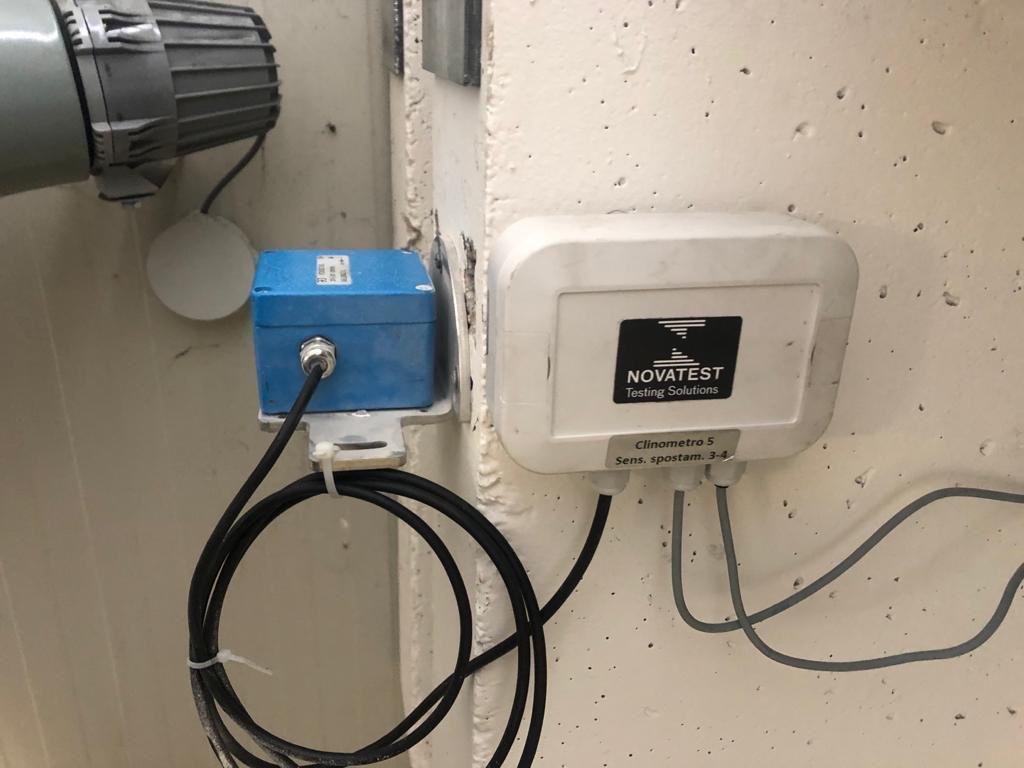
Tiltmeters to follow rotations of structural elements and bearings.
Following slowly evolving phenomena over time: deformations, displacements, rotations and cracks.
Static monitoring answers questions such as: is a crack stable or evolving? Is an element rotating? The answer is built from time series, not from a single reading.
Static monitoring follows quantities that change slowly compared with the vibration response: deformations, displacements, rotations of elements and bearings, crack opening.
Measurements are acquired over time and organised into time series; interpretation considers trends, variations and the boundary conditions under which they were recorded.
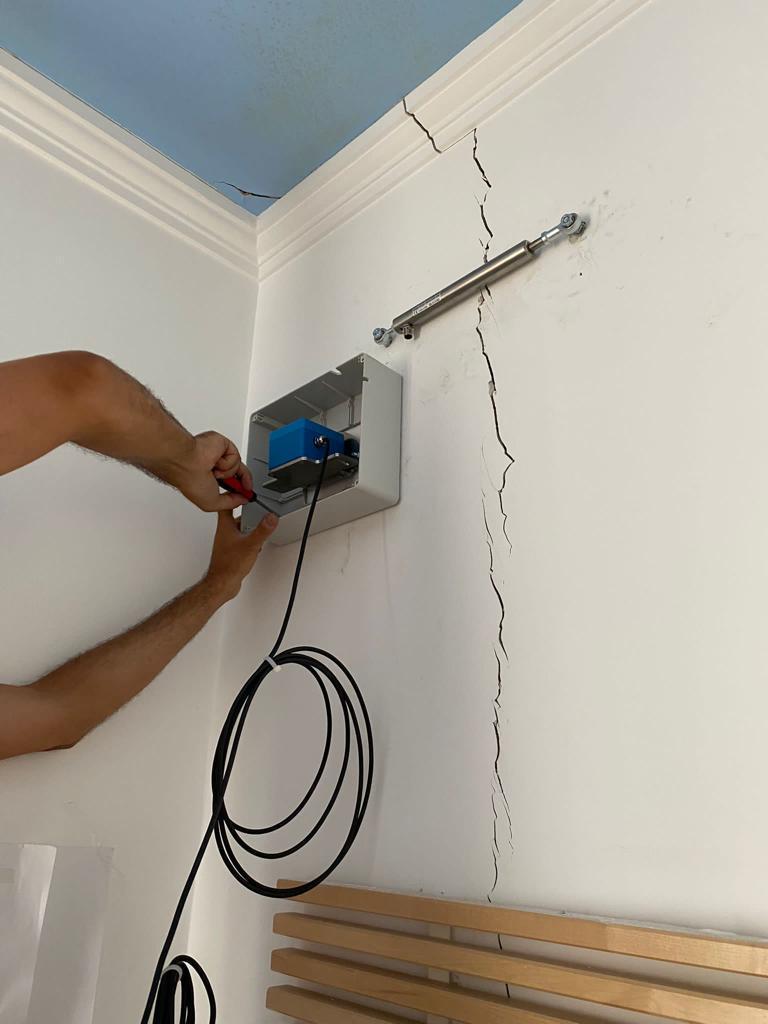
Tiltmeters to follow rotations of structural elements and bearings.
Crack meters and strain gauges to check whether a crack is stable or evolving.
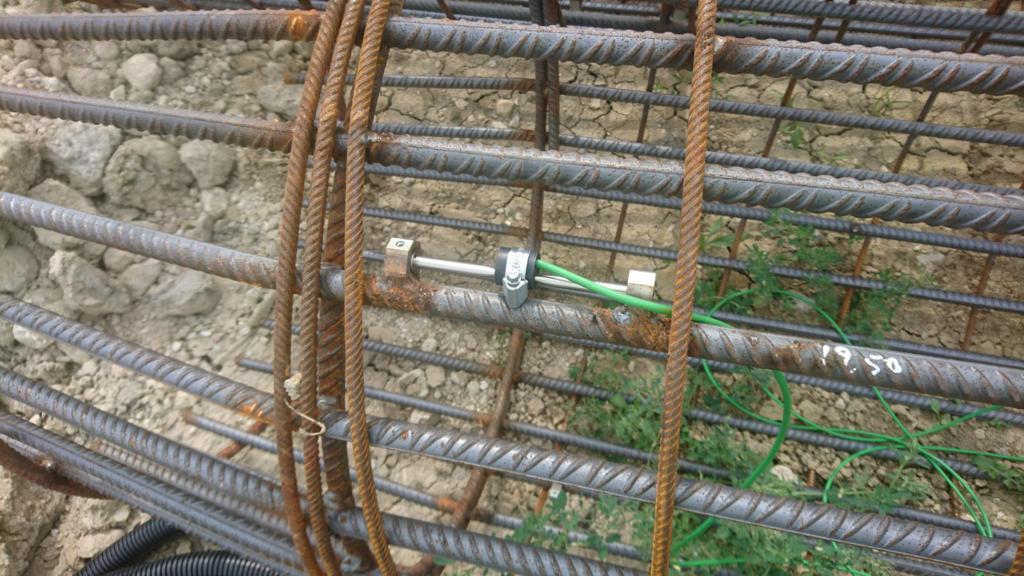
Strain gauges, including sensors embedded in reinforcement before casting.
Changes in element position observed over time with suitable sensors.
Data loggers recording measurements continuously or at intervals.
Where the system provides for them, thresholds agreed with the client to flag significant changes.
The value of static monitoring lies in the trend of the time series, read in the context of the structure, rather than in any single measurement.
Sensor installed before casting to follow the element from the construction phase.
Electronic strain gauge / crack meter to check a crack's behaviour over time.
Further topics in the monitoring cluster and the comparison with point-in-time diagnostics.
Vibrations and dynamic response.
Natural frequencies and mode shapes.
From single sensor to system.
Point-in-time surveys of materials and geometry.