Deformations and displacements
Changes in shape and position of structural elements over time.
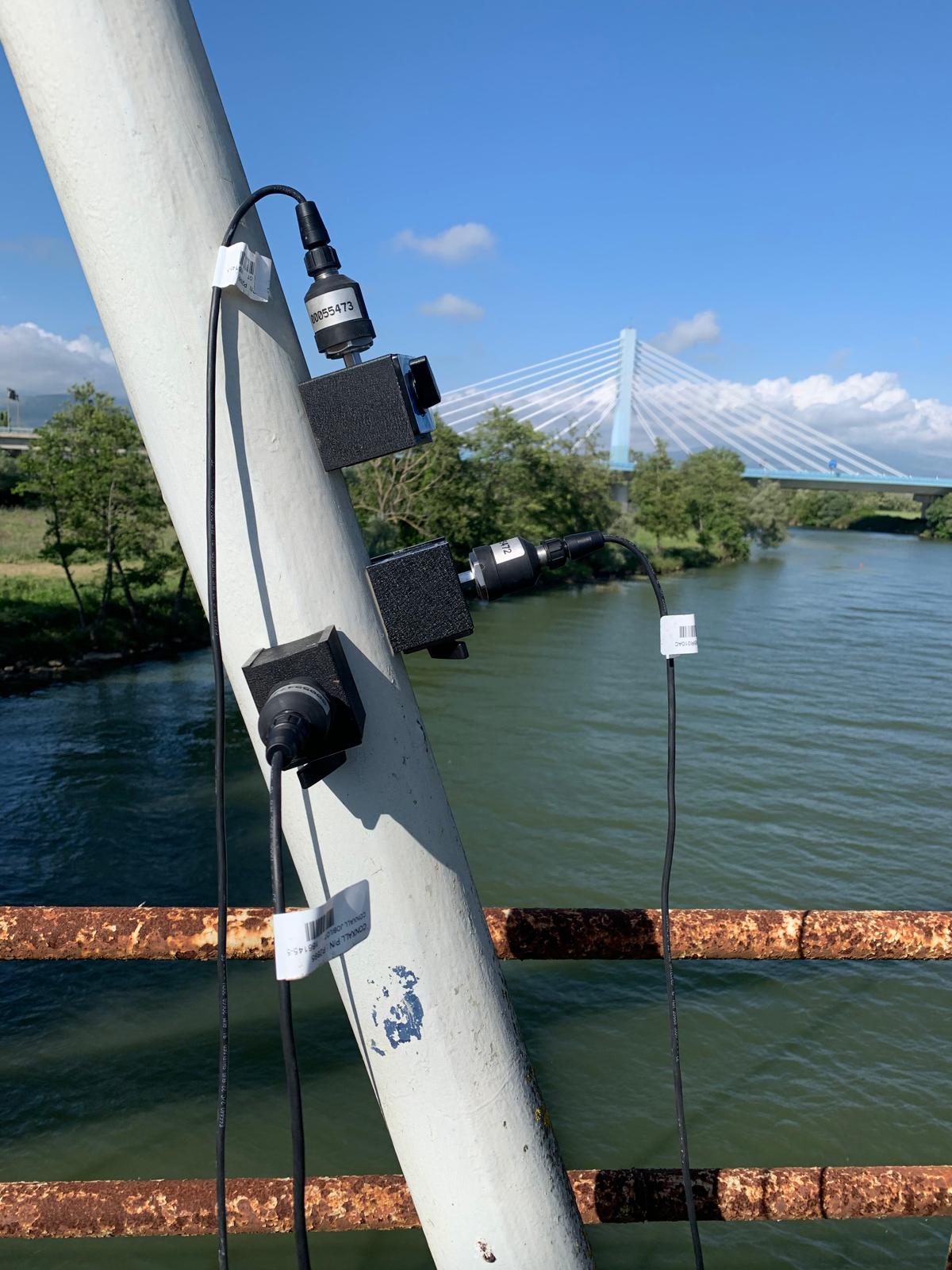
Observing the behaviour of structures and infrastructures over time, turning measurements, changes and vibrations into information useful for decision-making.
Structural monitoring is not a single test technique: it is an organised system for observing the behaviour of a structure over time, through sensors, acquisition, processing and interpretation. Unlike a single diagnostic survey, which captures a condition, monitoring builds a time series.
«A diagnostic campaign captures a condition. Monitoring builds a time series and makes it possible to observe the evolution, changes and response of the structure.»
Many management questions cannot be answered by a single inspection: is a crack stable or evolving? How does a deck respond to traffic? How does the behaviour of a historic building change over time?
Structural monitoring (SHM — Structural Health Monitoring) answers these questions by observing significant quantities continuously or repeatedly, and turning measurements into interpretable information.
Structure
Quantity to observe
Sensors
Acquisition
Analysis
Interpretation
Decision
The quantities to observe are chosen according to the question: it is not everything that is monitored, but what is significant for the decision.
Changes in shape and position of structural elements over time.
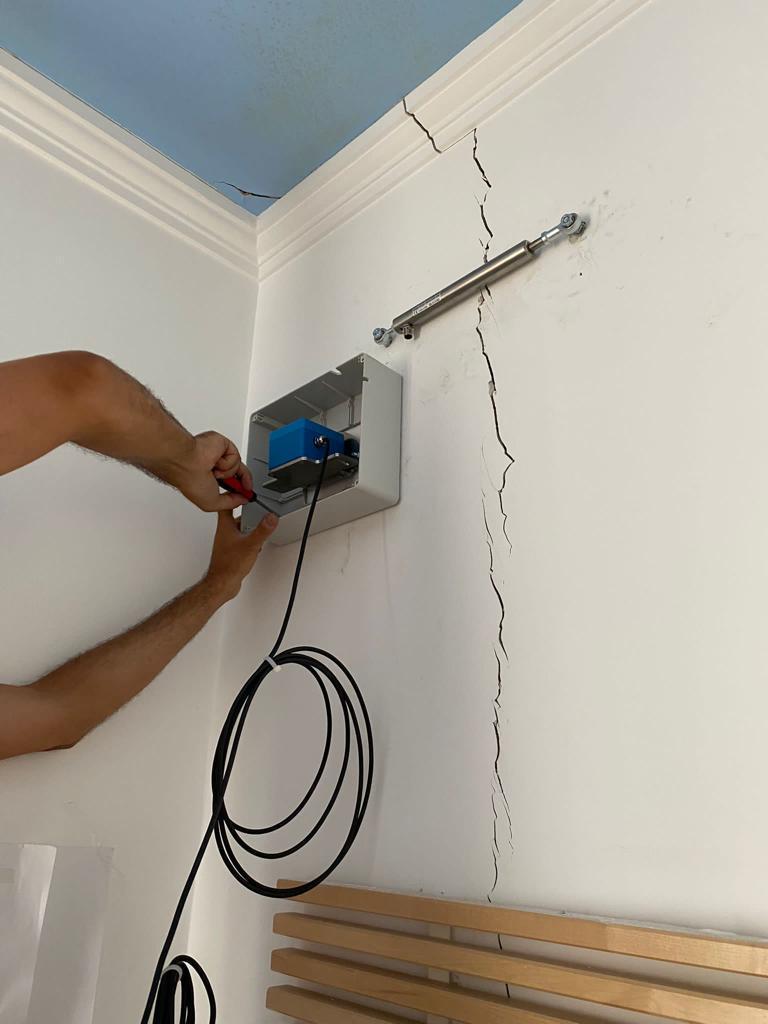
Opening and evolution of cracks, with strain gauges and crack gauges.
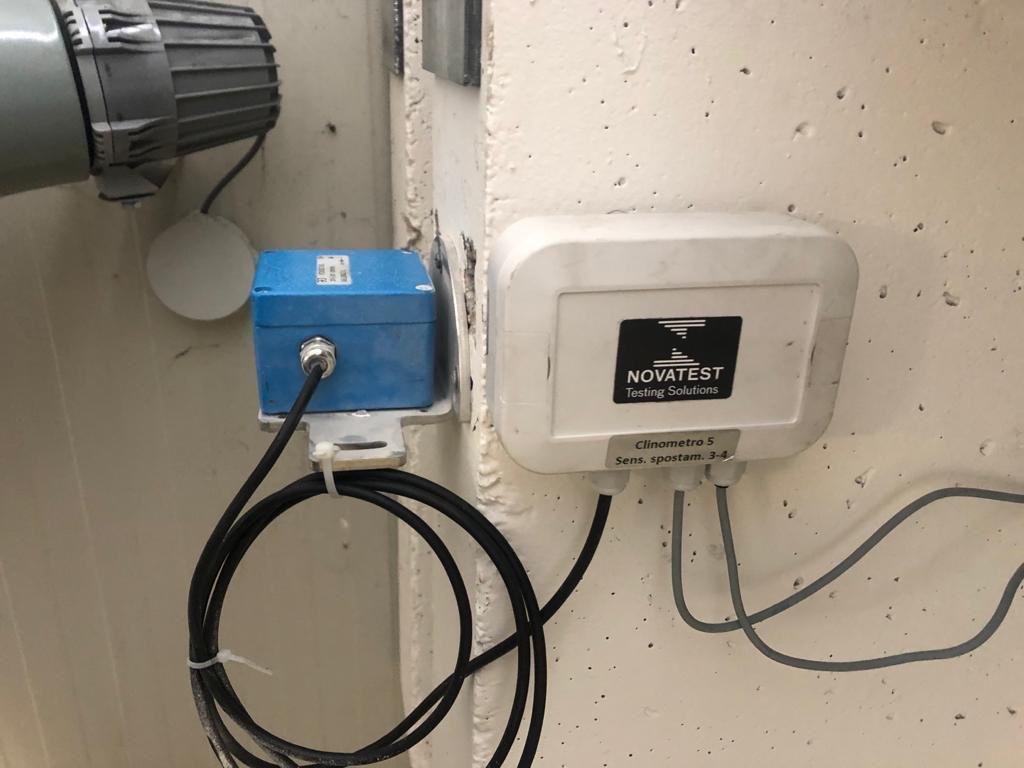
Rotations of elements and supports, checked with clinometers and inclinometers.
Accelerations, natural frequencies and mode shapes of the structure.
When relevant, environmental quantities useful for correctly interpreting the structural data.
Further parameters defined according to the specific monitoring question.
The choice between static and dynamic observation depends on the diagnostic and management question: they follow different phenomena and use different sensors.
Follows slowly evolving phenomena: deformations, displacements, rotations, crack opening. Uses sensors such as clinometers, strain gauges and crack gauges, with measurements taken over time.
Observes how the structure vibrates: accelerations, natural frequencies and mode shapes. Uses accelerometers and enables identification of the structure's dynamic response.
An effective monitoring system starts from the question, not from the available instrumentation.
The management or diagnostic question that monitoring must answer.
Identifying the parameters that are truly significant for the objective.
Sensors consistent with the quantities, the structure and the operating conditions.
Installation and configuration of the acquisition system.
Collection and control of measurements over time.
Analysis of time series and technical reading of results.
Reports, deliverables and attention thresholds defined with the client.
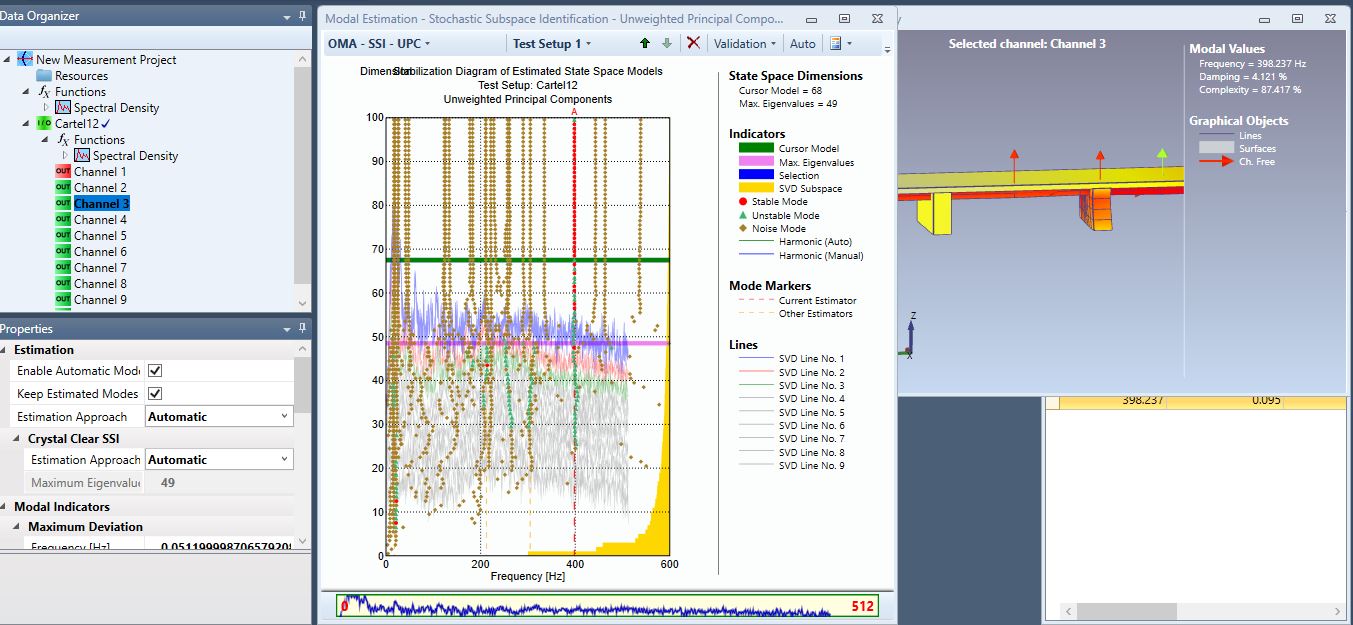
Every structure vibrates in a characteristic way: natural frequencies and mode shapes describe its dynamic behaviour. Modal analysis makes it possible to identify them from measured vibrations, even under operating conditions (OMA — Operational Modal Analysis, with techniques such as OMA-SSI).
The identified parameters can be compared with a numerical model (FEM) to calibrate it, or tracked over time to observe changes in dynamic behaviour.
Real examples of different questions that monitoring can answer, from documented Novatest Engineering experiences.
Sensor integrated into the reinforcement before casting: tracking the stress state of the element from the construction stage onward.
Clinometer and data logger to track rotations and displacements of the structure over time.
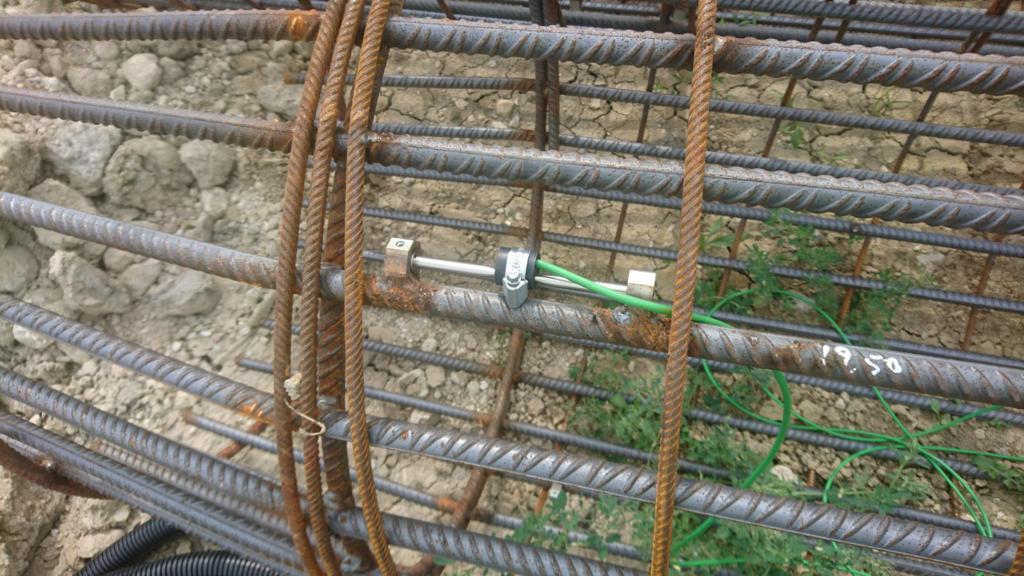
Electronic strain/crack gauge used to verify whether a crack is stable or evolving.
Operational modal analysis (OMA-SSI) with Artemis: identification of frequencies and mode shapes of a bridge deck.
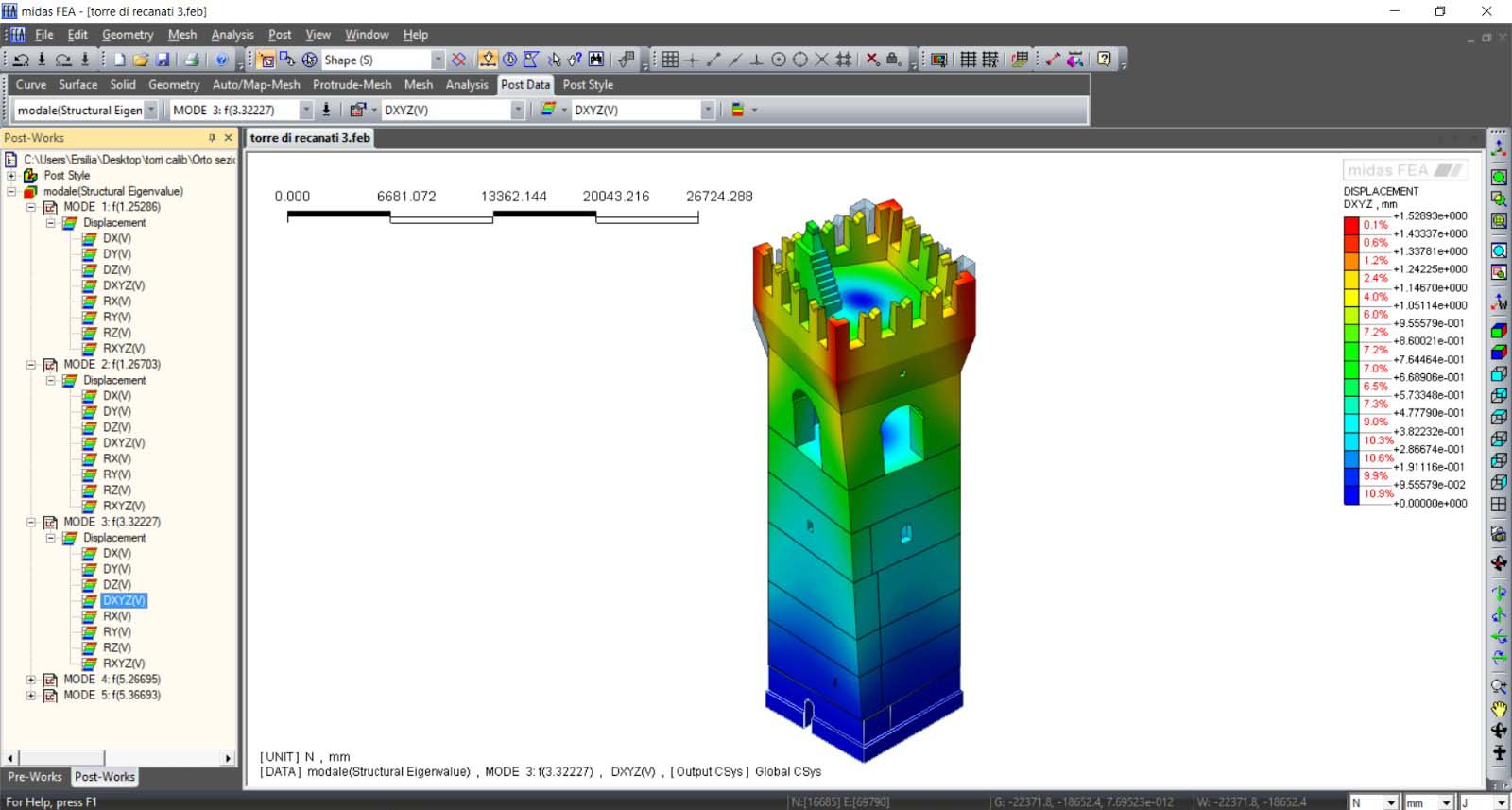
FEM modal analysis with Midas on a historic tower: comparison between measured frequencies and numerical model.
NDT surveys provide information on materials, internal geometry and anomalies at a given moment: they are a snapshot of the condition of the structure.
Monitoring observes behaviour over time: time series of significant quantities, to track the evolution and response of the structure.
Diagnostics and monitoring are not the same thing, but they can be used together when the question requires it.
A diagnostic survey can prompt monitoring; monitoring data can direct new targeted surveys.
Dedicated guides to the main areas of structural monitoring.
Natural frequencies, mode shapes and dynamic response of structures.
Deformations, displacements, rotations and crack evolution over time.
Vibrations, accelerations and identification of the dynamic response.
Design of the sensor system, acquisition and data management.
Novatest designs and manages end-to-end structural monitoring systems, from initial consultation to data interpretation: every system starts from the client's management question.
What needs to be known, and why.
The parameters that are significant for answering the question.
Sensors, acquisition and configuration consistent with the structure.
Field installation and collection of measurements.
Analysis of time series and dynamic parameters.
Technical reading of results in the context of the structure.
Reports, deliverables and support in management choices.
Designing a monitoring system starts from the question it must answer. Novatest's technicians can support you in defining the most effective quantities, sensors and acquisition strategy.