Non-destructive testing of structures: techniques, applications and selection criteria
In-depth knowledge of an existing structure requires an integrated diagnostic approach. No single technique can fully describe geometry, materials and condition: a reasoned combination of different methods builds a reliable knowledge model.
“There is no universally best diagnostic technique. There is a method best suited to the information that needs to be obtained.”
Why choose an integrated approach to structural investigations?
Each method answers a specific diagnostic question. Existing structures may differ from the original design: incomplete documentation, alterations over time, material deterioration or new intervention requirements call for an in-depth understanding of the structure's actual condition.
An effective diagnostic campaign therefore starts with the questions that need answers:
Where are the internal elements?
What is the structure's geometry?
What are the material properties?
Are there anomalies or discontinuities?
What is the condition of the structure?
Existing structure
Knowledge model
Integrated diagnostic methods
Geometric investigations
Position, levels and internal geometry of elements.
Material investigations
Physical and mechanical properties of materials.
Volumetric investigations
Reconstruction of the interior of a structural element.
Deterioration investigations
Anomalies, discontinuities and condition assessment.
From the existing structure to a knowledge model: combining geometric, material, volumetric and deterioration investigations provides a reliable basis for technical decisions.
Main non-destructive testing techniques
Each method answers a specific technical question. The main diagnostic objective and applicable materials are identified for each technique; the cards link to dedicated technical guides.
Ground-penetrating radar (GPR)
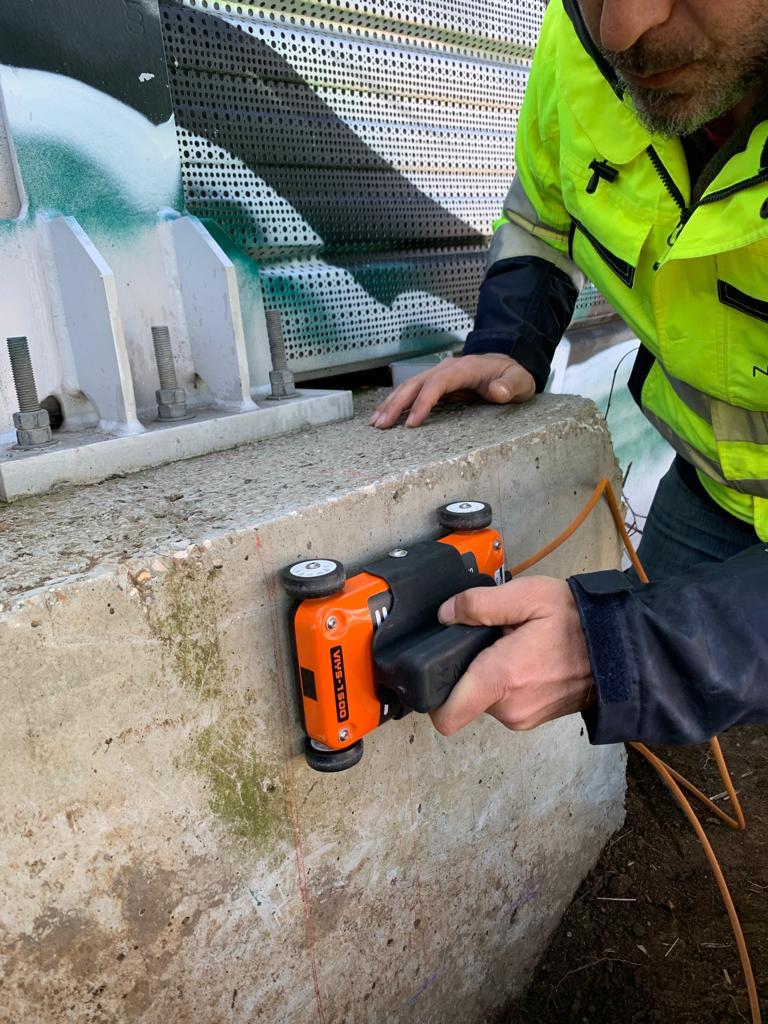
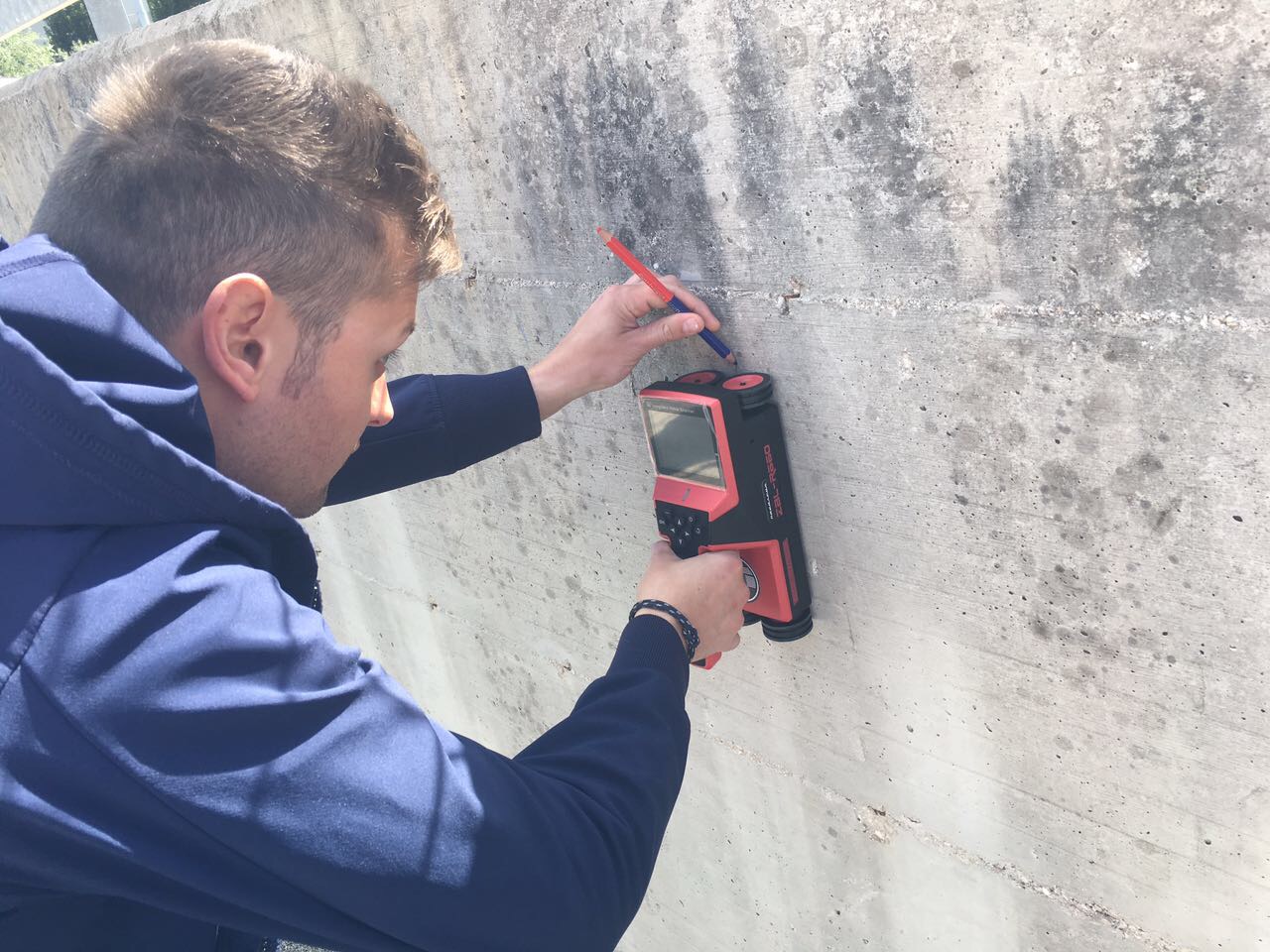
An electromagnetic-wave method for identifying internal elements, geometry and anomalies, with high productivity over large surfaces.
Diagnostic objective
Identification of internal elements, geometry and anomalies.
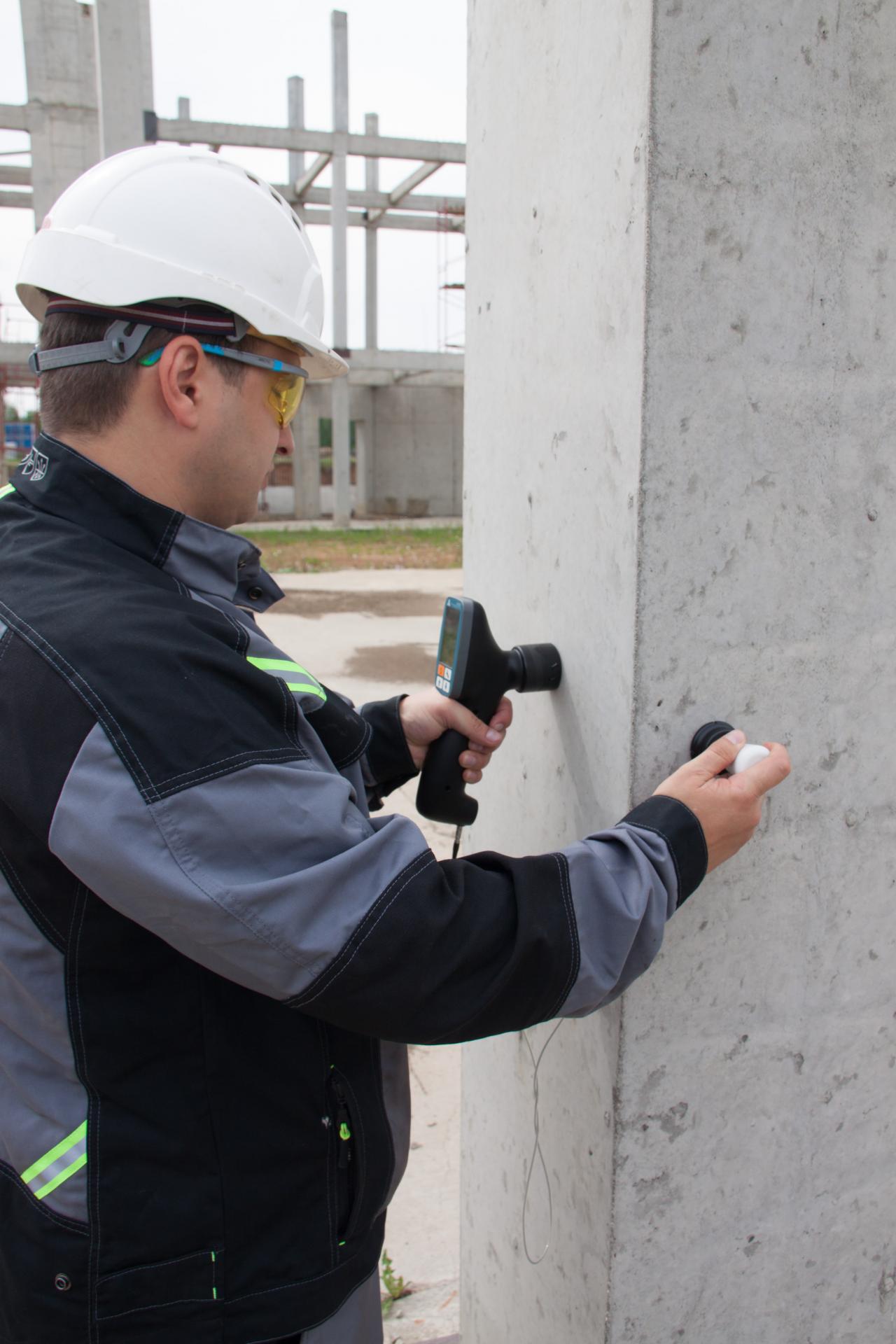
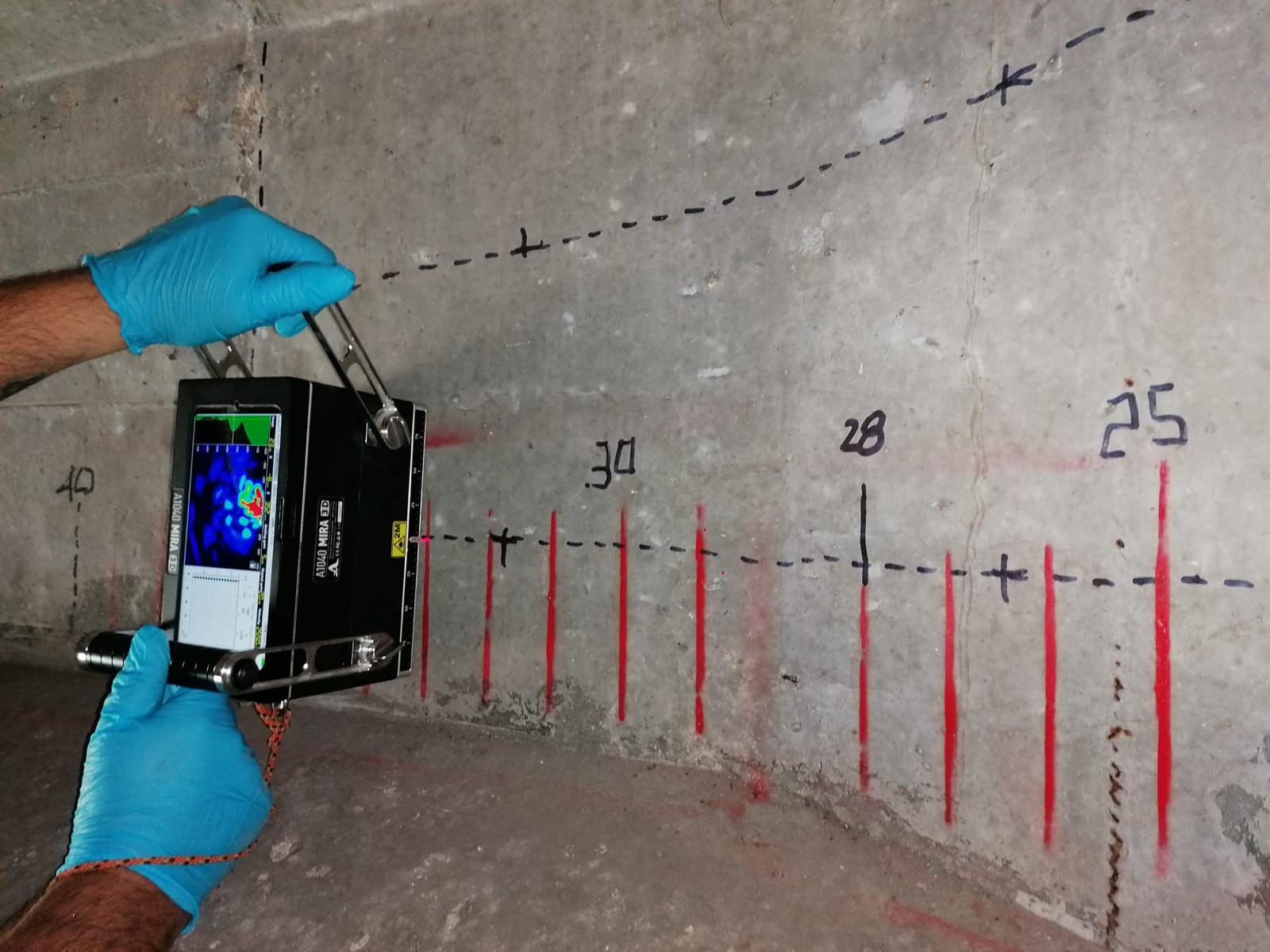
An advanced technique that analyses reflections of ultrasonic waves generated in the material to construct a three-dimensional or sectional representation of an element's interior.
Diagnostic objective
Identification of voids, cracks, debonding and internal anomalies using 3D or sectional imaging, including with access from one side only.
Analysis and investigation of bridges and viaducts
Different methods used to answer complementary diagnostic questions.
Bridges and viaducts are complex infrastructure, where understanding the internal condition of structural elements may require different diagnostic methods.
Techniques must be selected according to the diagnostic question, the structure's characteristics and operating conditions.
In specific investigation programmes, combining GPR, ultrasonic tomography and digital radiography can provide complementary information about the internal configuration of structural elements.
Application case
A documented example: the Via Mario de Bernardi viaduct
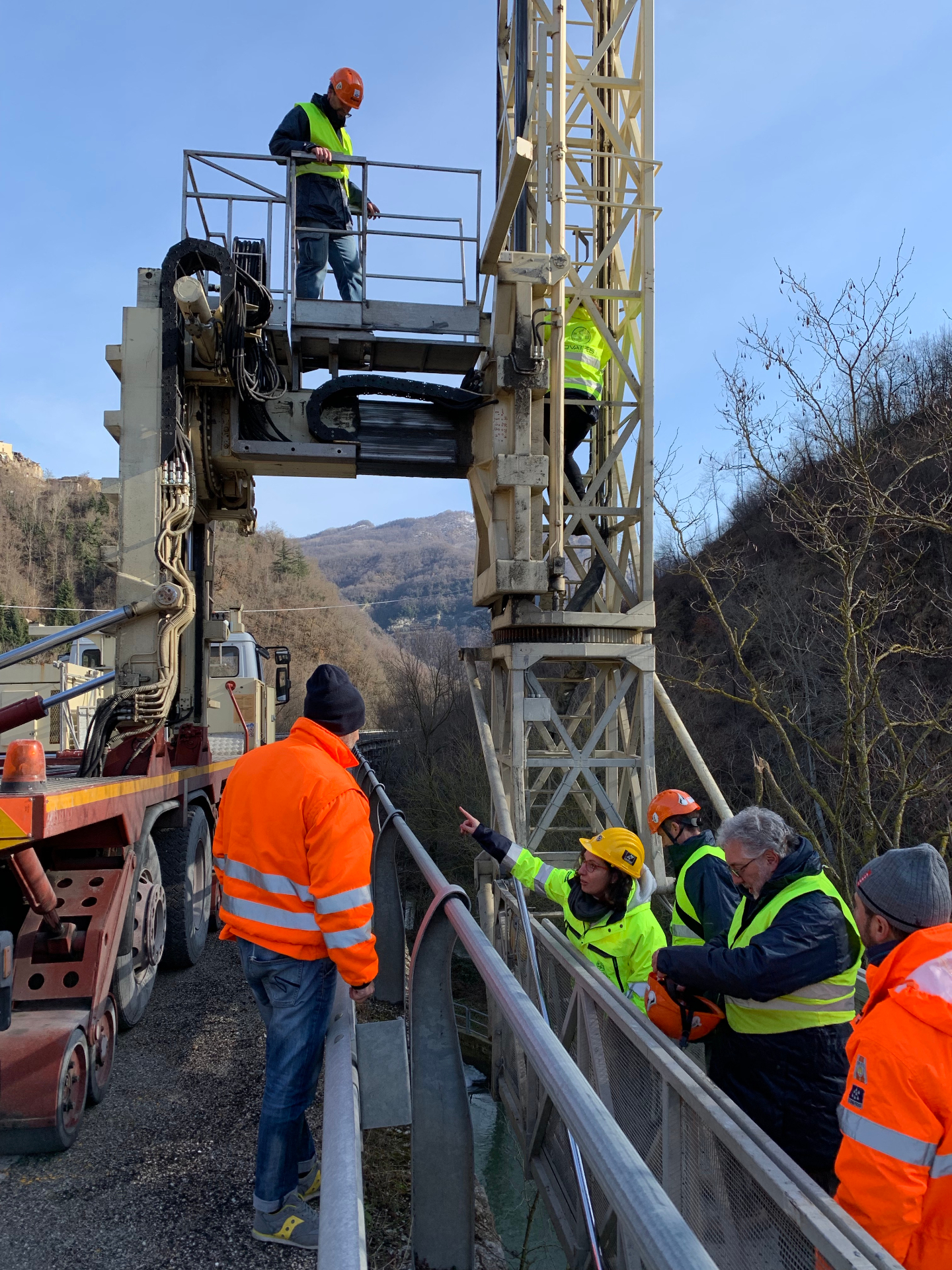
In 2019, Novatest Engineering carried out a demonstration campaign at the Via Mario de Bernardi viaduct near Fiumicino Airport using three non-destructive methods: GPR, ultrasonic tomography and digital radiography.
The aim was to investigate selected construction elements of the viaduct and demonstrate the potential of the different investigation methods.
The approach's value lies in obtaining different, complementary information, selecting each method for the specific diagnostic question.
Example investigation strategy
GPR
Location and geometry
Ultrasonic tomography
Analysis of internal discontinuities
Radiography
Detailed local investigation
Correlation of information
The diagram shows an example investigation strategy, not a mandatory procedure: the choice and sequence of methods depend on the diagnostic question and the structure's condition.
A diagnostic strategy does not mean using more techniques indiscriminately.
It means selecting, correlating and exploring the information needed to understand the structure better.
Documented experience
Experience on existing infrastructure
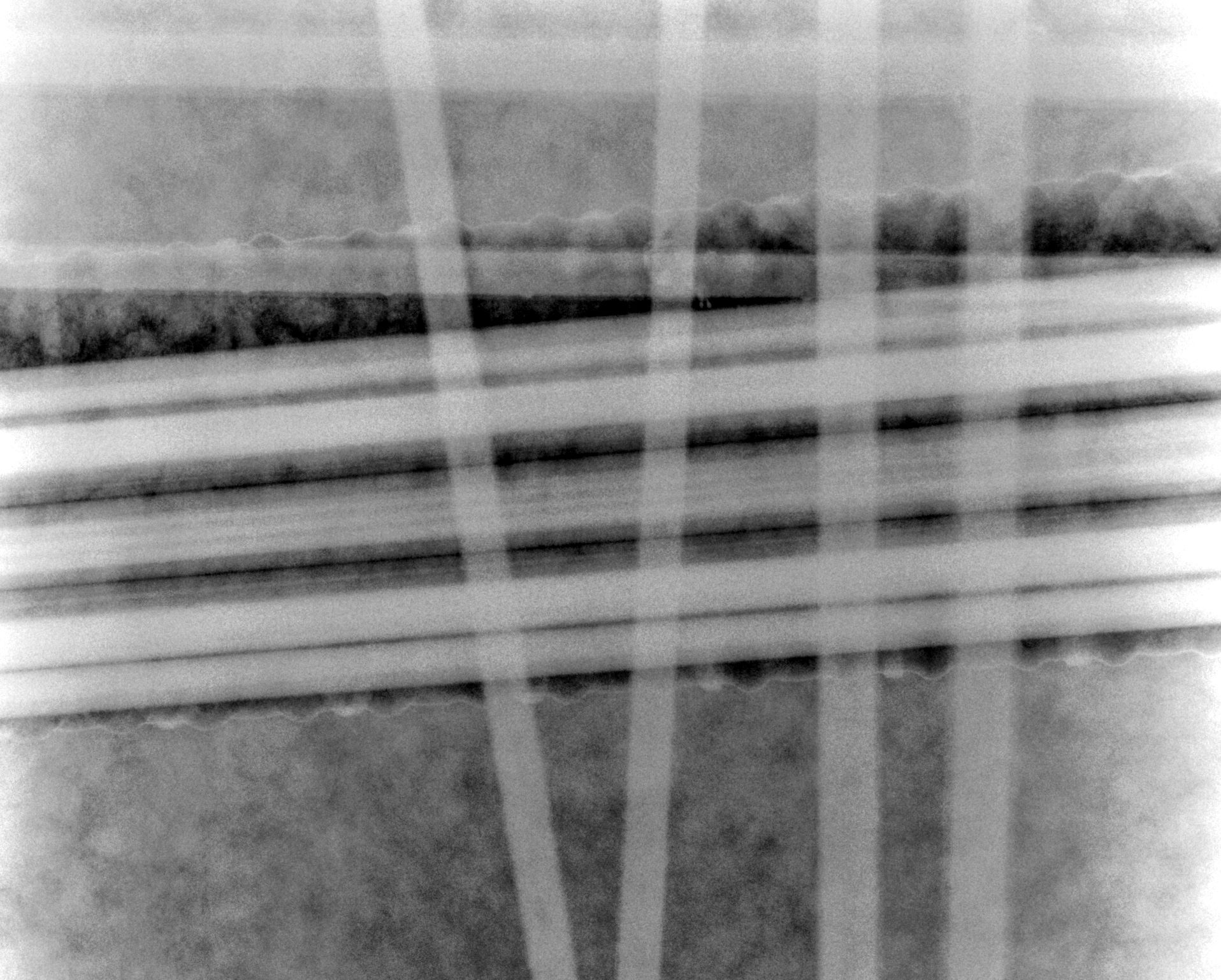
At the Tronto IV viaduct on the SS 4 Salaria, Novatest Engineering conducted a radiographic investigation campaign aimed at observing cavities, internal honeycombing and the condition of reinforcement, with particular attention to prestressing strands.
The campaign comprised 478 radiographic acquisitions.
Explore diagnostic investigations of bridges and viaducts
Read about methods, investigation strategies and application cases developed by Novatest Engineering on existing infrastructure.
Novatest is not simply a provider of test execution: every diagnostic campaign is a process of consultancy and client support, from problem analysis to decisions following the investigation.
01
Listening and analysing the problem
Working with the client to define the information actually required.
02
Advice on diagnostic strategy
A reasoned proposal of appropriate methods, rather than simply the equipment available.
03
Data acquisition
Field investigation using dedicated instrumentation.
04
Data processing
Processing and reconstruction of datasets.
05
Interpretation
Integrated technical interpretation of results.
06
Deliverables and decision support
Reports, drawings and support for subsequent decisions.
Integrating techniques: the added value of combined interpretation
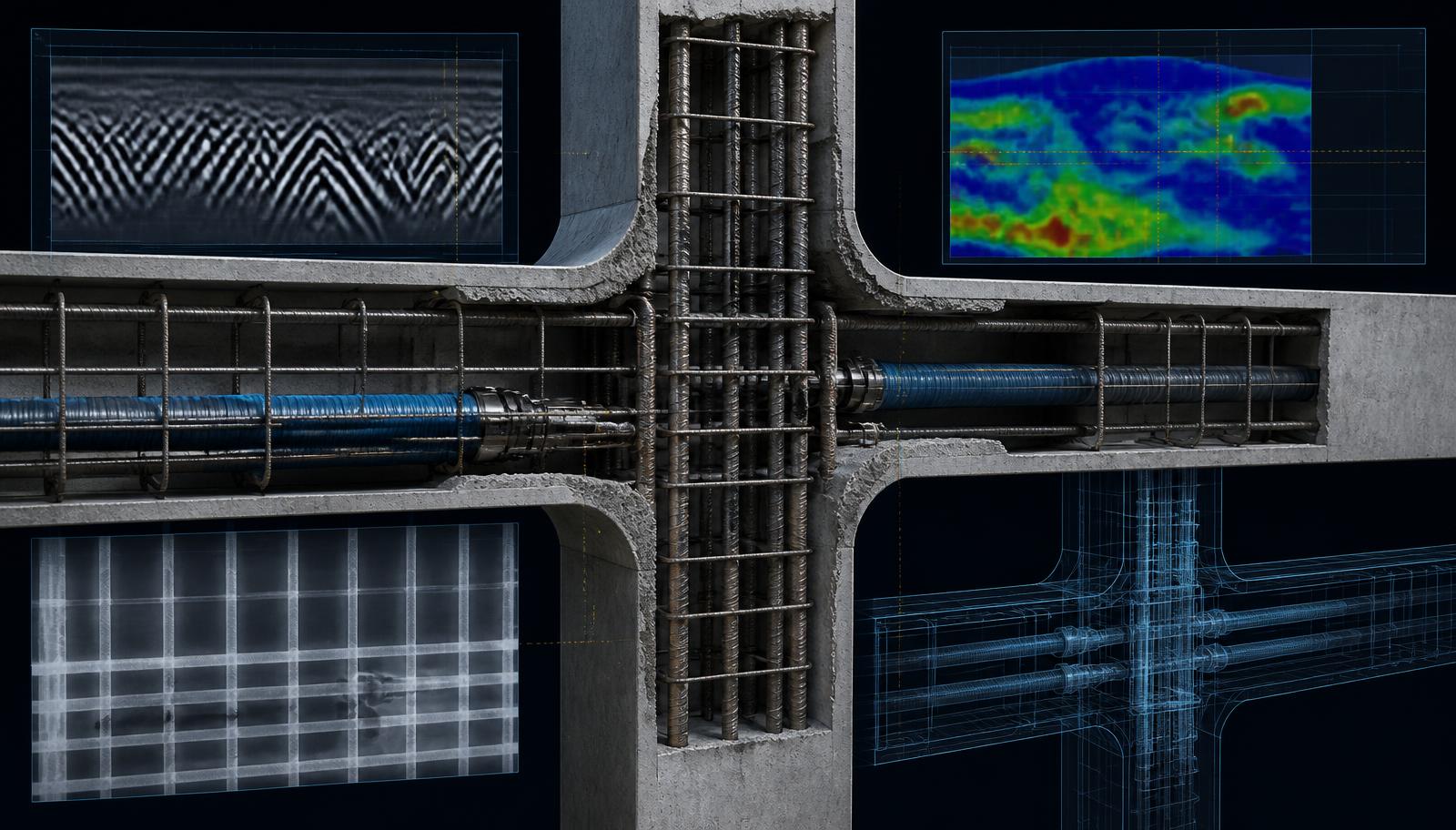
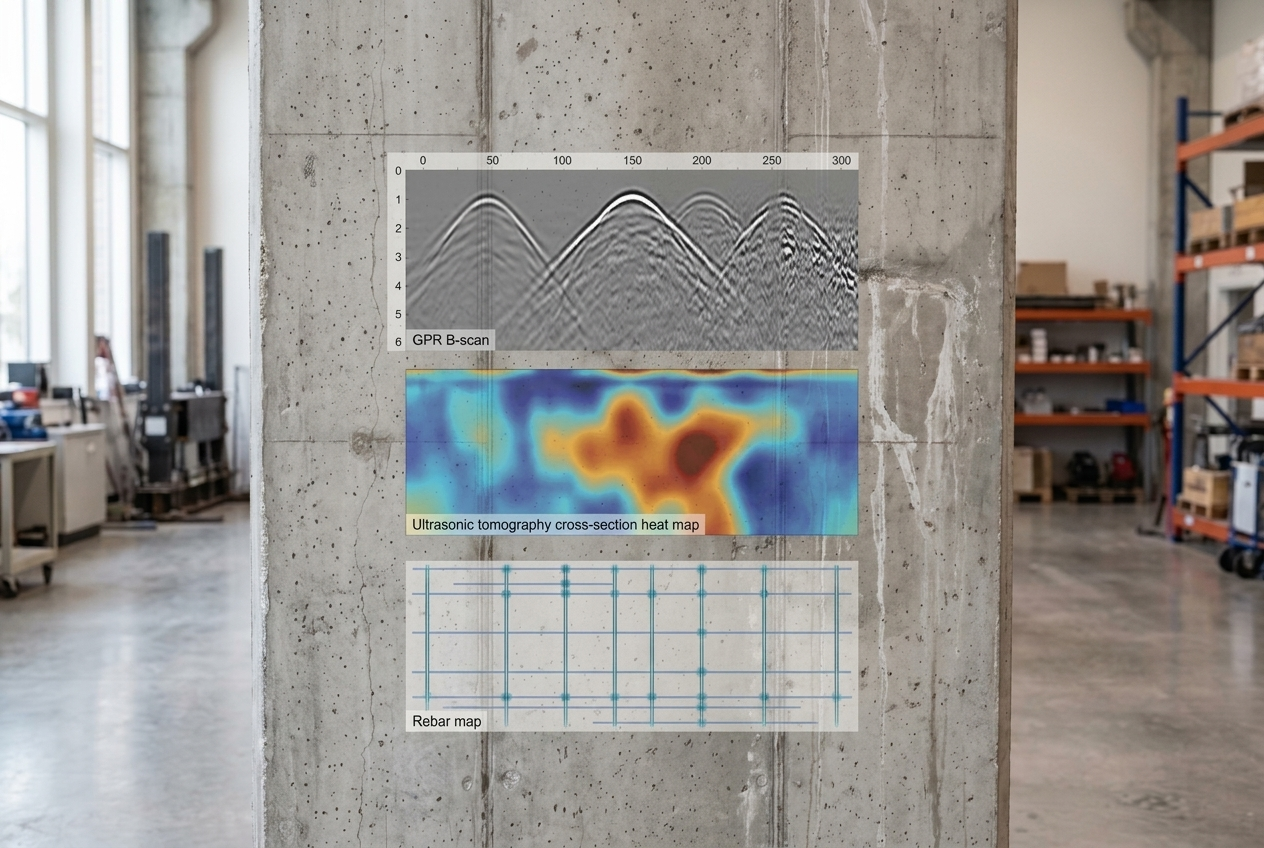
Integrating GPR, ultrasonic tomography and reinforcement mapping identifies embedded elements, discontinuities and internal anomalies in concrete, reducing diagnostic uncertainty and strengthening technical decisions.
Integrating GPR, ultrasonic tomography and reinforcement mapping identifies embedded elements, discontinuities and internal anomalies in concrete.
Frequently asked questions
What is non-destructive testing of structures?
These investigation methods provide information about the interior and surface of a structural element without compromising its integrity. They use electromagnetic or elastic waves, ionising radiation or thermal distribution analysis to produce data that supports technical assessment.
Which technique should be used to investigate concrete?
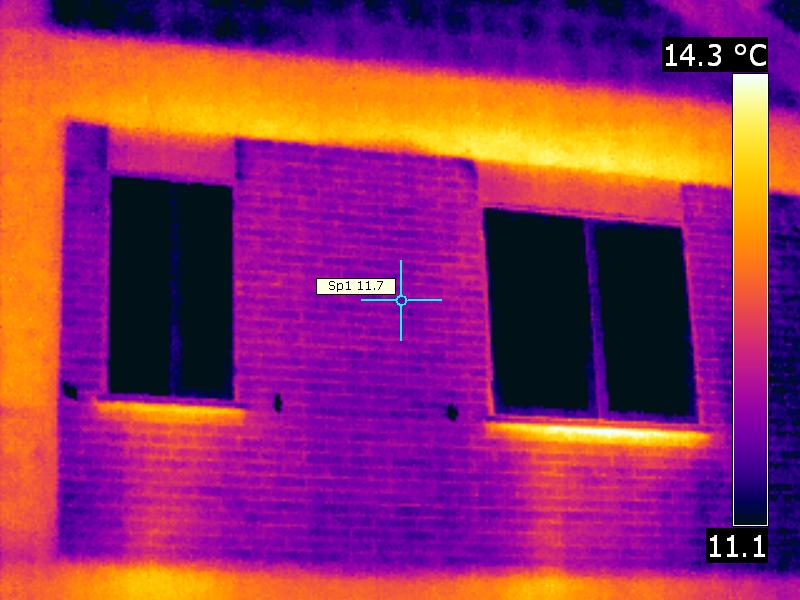
The choice depends on the information required. GPR is generally the most productive method for locating reinforcement and embedded elements and describing their geometry; ultrasonic tomography investigates the material's internal characteristics and discontinuities; thermography addresses extensive surface anomalies; radiography provides direct detail on specific features where its use is feasible.
What is the difference between GPR and ultrasound?
GPR uses electromagnetic waves and is particularly effective at locating metallic elements and discontinuities with high productivity over large surfaces. Ultrasound uses elastic waves to characterise the material and reconstruct the interior of an element tomographically. The two techniques provide different, often complementary information.
When should several diagnostic techniques be combined?
When a single method cannot provide an unambiguous answer, or when interpretation involves uncertainty related to materials, geometry or access conditions. Integration reduces diagnostic uncertainty and strengthens technical decision-making.
Does non-destructive testing replace conventional investigations?
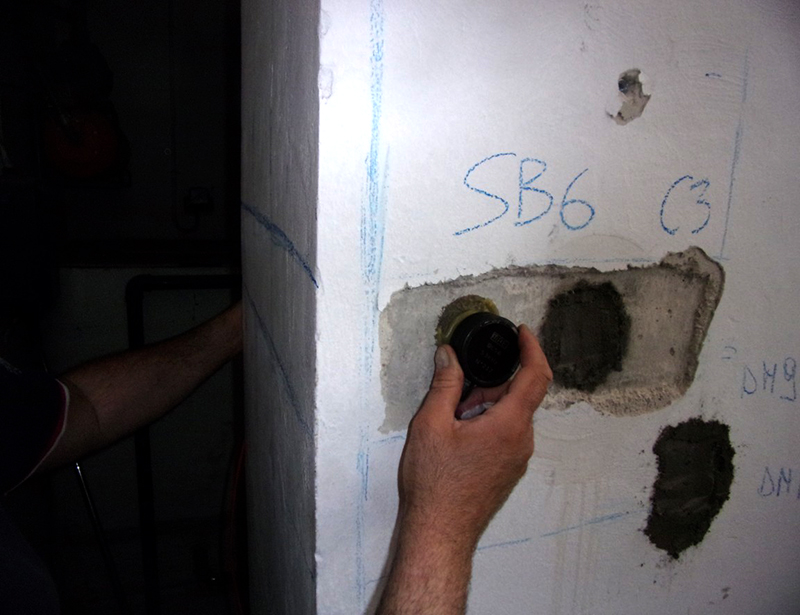
No. Non-destructive testing extends and improves knowledge of a structure, helping to limit invasive investigations and target them at significant locations. Combining non-destructive methods with direct tests remains the most reliable approach.
Do you need to understand a structure's actual condition?
The choice of diagnostic method depends on the technical problem, the material and the information required. Novatest engineers can support you in defining the most effective strategy.